
Regulation of segregation vs unbiased assortment – Unraveling the Regulation of Segregation vs. Impartial Assortment. Understanding how traits are handed down is essential for greedy the complexities of genetics. This exploration delves into the basic distinctions between these two ideas, highlighting their significance in shaping the variety of life.
Understanding the legislation of segregation versus unbiased assortment is essential for genetics. This often-confusing idea, central to inheritance patterns, might be surprisingly accessible when considered by means of the lens of a bird-related crossword clue, like discovering the reply to “small, feathery creature” bird related crossword clue. In the end, greedy these ideas permits for a deeper comprehension of how traits are handed down by means of generations.
The Regulation of Segregation dictates that every mother or father contributes one allele for a trait, whereas the Regulation of Impartial Assortment means that traits are inherited independently of each other. These ideas, whereas seemingly easy, underpin the huge array of genetic variations we observe within the pure world. We’ll discover how these legal guidelines work together, impacting the chances of particular traits showing in offspring.
Genetics is an interesting subject, revealing the intricate mechanisms behind the inheritance of traits. Two basic ideas, the Regulation of Segregation and the Regulation of Impartial Assortment, clarify how traits are handed from mother and father to offspring. Whereas each are essential to understanding heredity, they handle distinct elements of genetic transmission.
What’s the Regulation of Segregation?
The Regulation of Segregation, a cornerstone of Mendelian genetics, describes how pairs of alleles (completely different variations of a gene) separate throughout gamete formation (the manufacturing of sperm and egg cells). Crucially, every gamete receives just one allele of every gene pair. This separation ensures that offspring inherit one allele from every mother or father for every gene.
Illustrative Instance, Regulation of segregation vs unbiased assortment
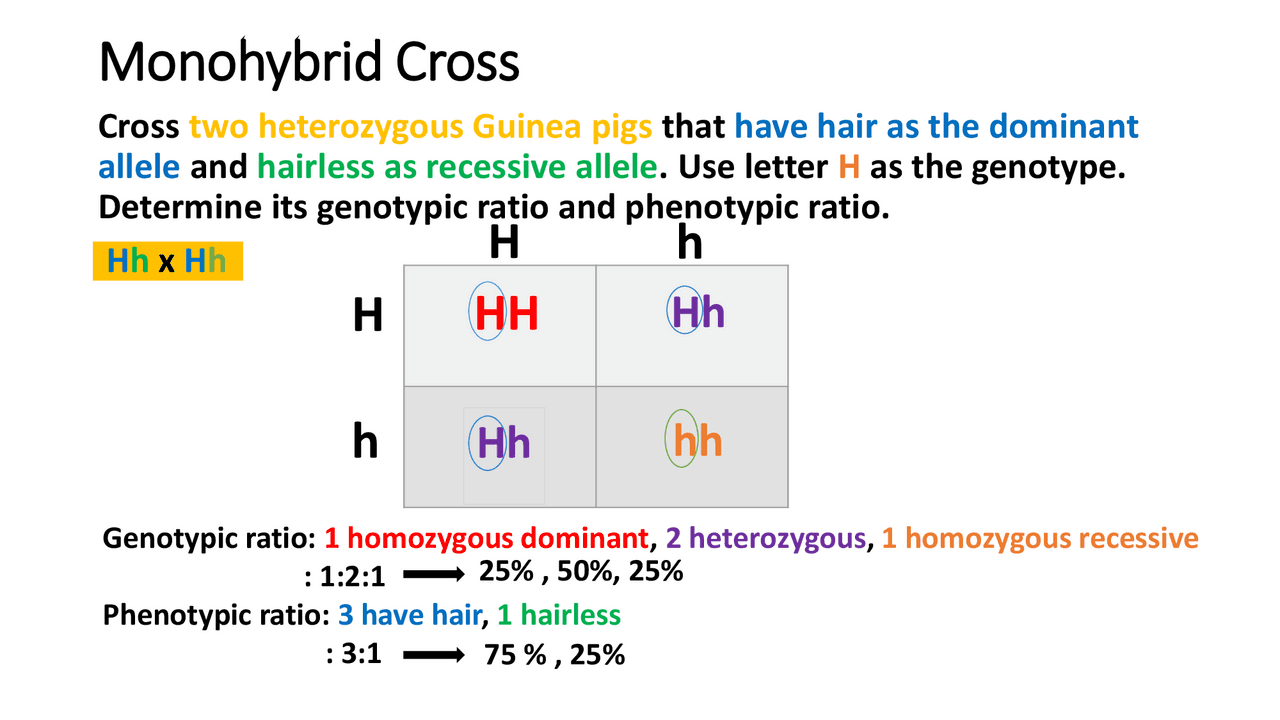
Take into account a pea plant with a gene for flower colour. One allele ( P) codes for purple flowers, and the opposite ( p) codes for white flowers. If the plant is heterozygous ( Pp), that means it carries each alleles, the Regulation of Segregation dictates that in gamete formation, every gamete will obtain both the P allele or the p allele, however not each.
What’s the Regulation of Impartial Assortment?
The Regulation of Impartial Assortment, additionally a cornerstone of Mendelian genetics, expands upon the Regulation of Segregation by describing how completely different gene pairs segregate independently of each other throughout gamete formation. Because of this the inheritance of 1 trait does not affect the inheritance of one other. The alleles for various genes are randomly distributed into gametes.
Illustrative Instance, Regulation of segregation vs unbiased assortment
Persevering with with the pea plant instance, think about that this plant additionally has a gene for seed form, with one allele ( R) for spherical seeds and one other ( r) for wrinkled seeds. If the plant is heterozygous for each flower colour ( Pp) and seed form ( Rr), the Regulation of Impartial Assortment states that the alleles for flower colour ( P or p) are distributed into gametes independently of the alleles for seed form ( R or r).
Understanding the legislation of segregation versus unbiased assortment is essential in genetics. Whereas these ideas might sound summary, they underpin how traits are handed down. For example, contemplate the fascinating and surprisingly advanced interaction of those legal guidelines in relation to the listing of four-letter phrases ending in “w” here. In the end, deciphering these basic ideas gives a sturdy basis for comprehending the intricate mechanisms of inheritance.
This results in 4 doable mixtures of alleles within the gametes: PR, Pr, pR, and pr.
Understanding the legislation of segregation versus unbiased assortment is essential for greedy genetics. It is a advanced interaction, akin to navigating a tightrope stroll, the place the success of 1 precept relies on the opposite. This delicate stability, very similar to surviving a tough state of affairs, generally seems like profitable by the pores and skin of my enamel. by skin of my teeth.
In the end, each ideas are basic to predicting genetic outcomes and understanding inheritance patterns.
Distinguishing the Two Legal guidelines
Whereas each legal guidelines are important for understanding inheritance, they differ of their focus. The Regulation of Segregation explains how alleles of a single gene pair separate, whereas the Regulation of Impartial Assortment describes how alleles of various gene pairs are distributed independently.
[Image: Venn diagram illustrating the relationship between the Law of Segregation and the Law of Independent Assortment]
Implications for Genetic Range
The mixed results of the Regulation of Segregation and the Regulation of Impartial Assortment are essential for producing genetic variety inside populations. The random assortment of alleles results in an unlimited array of doable mixtures of traits in offspring, a basic mechanism driving adaptation and evolution.
Fashionable Purposes
These basic ideas, although initially described within the context of pea vegetation, have far-reaching implications in fashionable genetics. Understanding these legal guidelines is essential for:

- Predicting inheritance patterns in households.
- Creating genetic screening and diagnostic instruments.
- Enhancing agricultural practices by means of selective breeding.
- Understanding and treating genetic issues.
Actual-World Purposes
[Image: Example of a Punnett square demonstrating inheritance of traits based on the laws of segregation and independent assortment]
The applying of those legal guidelines might be seen in numerous fields. For example, in agriculture, understanding the inheritance patterns of fascinating traits permits farmers to selectively breed vegetation and animals with enhanced traits. In medication, these legal guidelines assist in predicting the probability of offspring inheriting genetic issues and growing focused therapies.
Additional Exploration
[See also: Exploring Mendelian Genetics in Detail]
[See also: Understanding Genetic Disorders]
Additional analysis into these legal guidelines and their implications continues to uncover fascinating elements of heredity and their affect on the world round us. The ideas of segregation and unbiased assortment usually are not simply theoretical ideas; they’re basic to understanding the mechanisms of life itself.
Understanding the legislation of segregation versus unbiased assortment is essential in genetics. Primarily, they’re each about how traits are handed down, however the distinction lies in how they’re inherited. This idea, like being “in the identical boat” in the same boat meaning , highlights a shared wrestle or state of affairs, much like the shared ideas underlying how completely different traits segregate and independently assort throughout replica.
This dialogue gives a basic overview. For a extra in-depth understanding of the intricacies of inheritance, exploring particular examples and superior ideas is really helpful.
Do you’ve got any questions concerning the Regulation of Segregation and the Regulation of Impartial Assortment? Share your ideas within the feedback beneath!
Remember to share this text with others who may discover it useful.
In conclusion, the Regulation of Segregation and Impartial Assortment are cornerstones of Mendelian genetics. They supply a framework for understanding how traits are handed down by means of generations. Whereas seemingly easy, these ideas have profound implications for predicting the probability of assorted traits showing in offspring and the fascinating variety we see within the pure world. This understanding is important for fields starting from agriculture to medication.
FAQ Abstract: Regulation Of Segregation Vs Impartial Assortment
What are alleles?
Understanding the legislation of segregation versus unbiased assortment is essential for greedy Mendelian genetics. This intricate interaction of inheritance patterns dictates how traits are handed down, however for a fast psychological train, contemplate the various listing of 4-letter phrases beginning with ‘e’ here. In the end, each ideas are important to comprehending the complexity of genetic inheritance.
Alleles are completely different variations of a gene. For instance, the gene for eye colour has alleles for blue eyes, brown eyes, and inexperienced eyes.
How do these legal guidelines relate to Punnett squares?
Punnett squares are visible instruments used to foretell the doable genotypes and phenotypes of offspring primarily based on the alleles of the mother and father, straight making use of the ideas of segregation and unbiased assortment.
What’s the significance of those legal guidelines in fashionable biology?
These legal guidelines stay basic to fashionable biology, impacting fields from understanding genetic issues to enhancing agricultural yields by manipulating genetic traits. They type the muse of our understanding of heredity.
Are there exceptions to the legal guidelines of segregation and unbiased assortment?
Whereas typically correct, there are exceptions, significantly in conditions involving linked genes (genes situated shut collectively on the identical chromosome) the place unbiased assortment does not totally apply.
